A lightning protection system is one of the few pieces of infrastructure that is bought, commissioned, signed off, and then forgotten, on the assumption that passing once means passing forever. The compliance certificate goes in the file, the contractor leaves, and everyone moves on. Five years later, the system on paper and the system on the building have quietly become two different things.
This is not negligence. It is the nature of the thing. Protection systems degrade, standards move, and facilities change, and none of it announces itself. The certificate that was accurate on the day it was issued slowly stops describing reality, and nobody notices until an event makes the gap visible. Here is how that happens, and why a one-off engagement is not the same as protection.
Surge protective devices are sacrificial by design
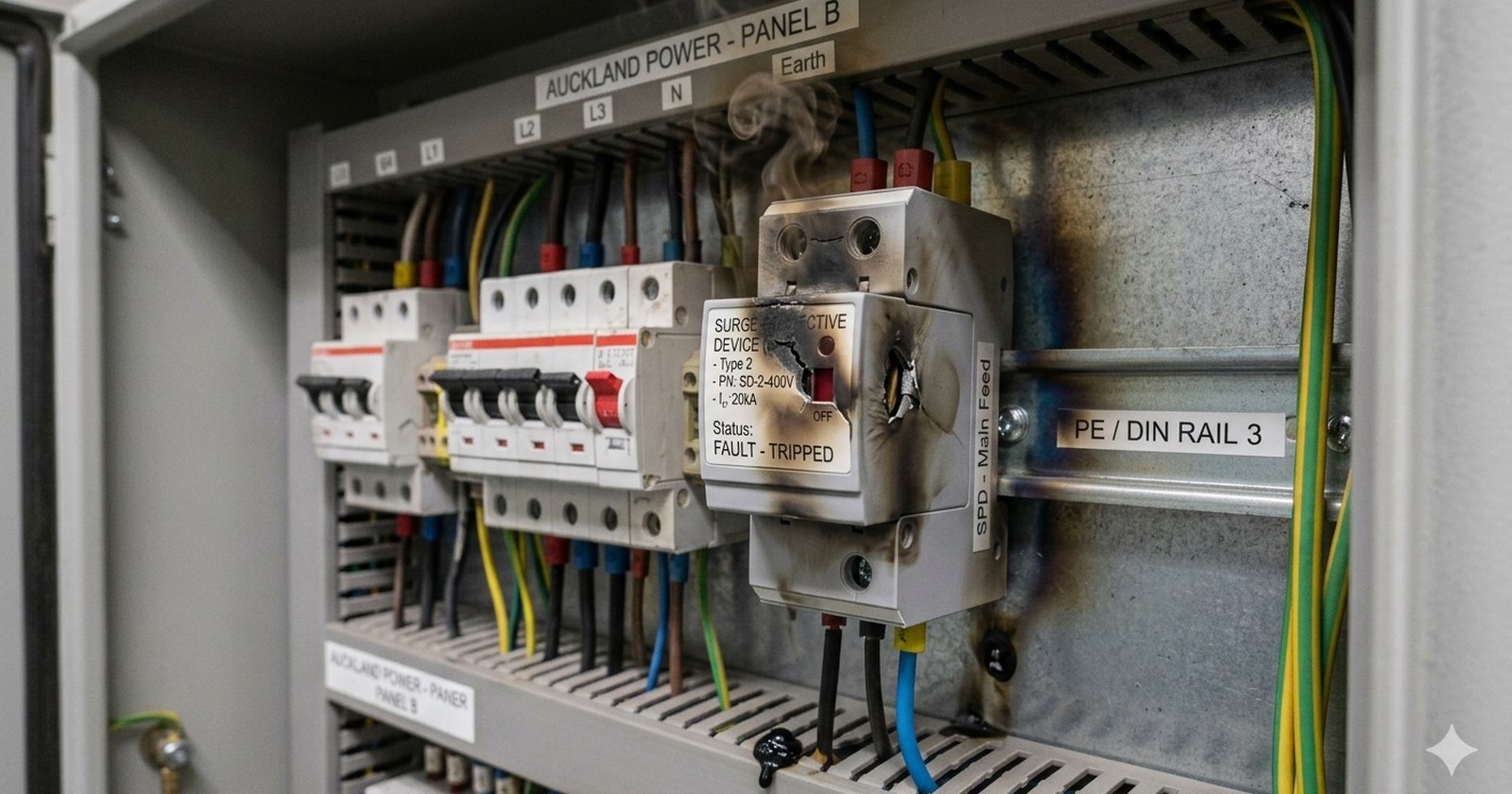
The most common silent failure is in the surge protective devices. An SPD is a sacrificial component. Every surge it diverts, including the small everyday transients from switching and motor starts, takes a little capacity with it. The damage is cumulative. A device is generally considered to be at the end of its useful life once it has lost roughly a tenth of its design capacity, and it can reach that point through ordinary wear long before any dramatic event.
The trap is that a degraded SPD looks and behaves exactly like a healthy one until the moment it is asked to perform. Most carry a status indicator, green for healthy, red or dark for failed, but that only tells you anything if someone is standing in front of the panel looking at it. An SPD that failed eighteen months ago has been leaving equipment exposed for eighteen months, and the first anyone hears of it is when a surge that should have been clamped reaches the equipment instead. In humid, lightning-active environments, devices can need replacing every two to three years; in drier conditions they may last considerably longer. Either way, the replacement interval is a maintenance fact, not a fit-and-forget assumption.
Earthing corrodes where you cannot see it
The earthing system has the same problem in slower motion. Connections corrode. Buried conductors degrade. Soil conditions shift with moisture and seasons, changing the resistance the system was designed around. A bond that measured well at commissioning can drift out of specification over years without any visible sign above ground.
Because so much of an earthing system is buried or concealed, visual inspection alone will not find these problems. The only reliable way to know the earth path still performs is to measure it, which is exactly what periodic earthing testing and modelling is for. A system that passed its fall-of-potential test five years ago is not guaranteed to pass today, and the difference matters because every other protection measure depends on that earth path working.
The standard moves under your feet
Even a system that has not physically degraded at all can fall out of compliance, because the standards evolve. The 2024 third edition of IEC 62305-2 changed how risk is assessed, introducing a combined single-risk concept, a new treatment of internal-system damage, and ground strike-point density in place of flash density. A risk assessment carried out against the 2010 edition is now built on a superseded method, through no fault of the original work. We covered those changes in detail in our piece on what changed in IEC 62305-2:2024.
The point is that compliance is not a permanent state. It is a snapshot taken against the standard in force on a particular day. When the standard updates, the snapshot ages, whether or not anyone touches the building.
And the facility itself never stops changing
Then there is the building. A new rooftop chiller. An extended server hall. A solar array. A telecoms mast. Every modification changes the protection requirement, and protection design rarely keeps pace with operational change. A system sized for the original facility can be quietly inadequate for the one that exists five years later, not because anything failed, but because the thing it was protecting grew past it.
Why one-off protection leaves a gap
Put these four together, sacrificial devices, corroding earth, moving standards, and a changing facility, and the conclusion is hard to avoid: a protection system is not a product you install once. It is a system that needs attention across its life. The traditional project-based model handles the installation well and then leaves a gap until the next incident or the next audit forces a look.
Closing that gap is the whole idea behind Resiliency as a Service: scheduled site audits, SPD condition checks, periodic earthing verification, and compliance tracking against the current standard, so the system on the building keeps matching the system on paper. It is the difference between finding a failed SPD on a maintenance visit and finding it after it failed to do its job.
If your last lightning protection engagement ended with a certificate and a handshake, it is worth asking a simple question: in the years since, what has been checking that the protection still works? If the honest answer is nothing, the five-year problem is already running.
When was your protection last verified?
If your system was commissioned and then left alone, we can tell you what has drifted, and what it would take to bring it back to current.
Request a Site Audit