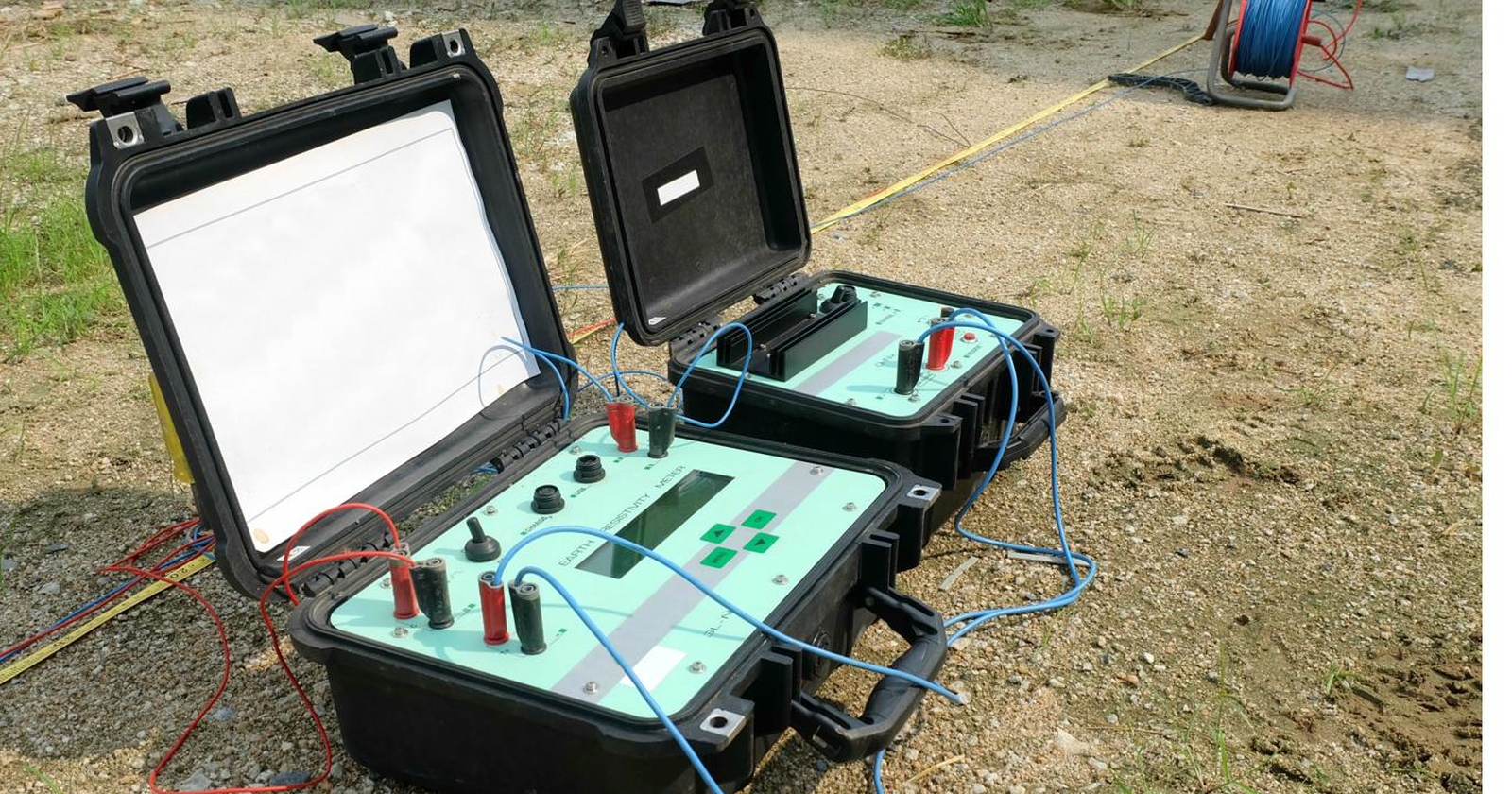
An earthing test comes back with a number. The number is below the threshold. The report says pass, the file is updated, and everyone moves on satisfied. That is usually the right outcome, but it hides a more useful truth: a single earthing measurement tells you about one day, in one set of conditions, at the points you happened to test. Understanding what the number does and does not capture is the difference between a box-ticking exercise and knowing your earthing system actually works.
Here is what earthing testing measures, how the core methods work, and why the passing figure is the start of the picture rather than the end of it.
Two measurements, two different questions
Earthing verification rests on two distinct measurements that answer two different questions, both carried out per the methods set out in IEEE 81, the guide for measuring earth resistivity, ground impedance, and earth surface potentials.
Soil resistivity: what the ground will allow
Before an earthing system is even designed, the soil itself sets the limits. Soil resistivity testing, typically by the Wenner four-point method at a range of probe spacings, measures how readily the ground conducts at different depths. It reveals soil layering, identifies high-resistivity strata, and gives the designer the data to size and place electrodes properly. Without it, an earthing design is built on assumption rather than measurement, and the soil does not care about assumptions.
Resistivity matters enormously to what is achievable. IEC 62305-3:2024 notes, for instance, that in soil with resistivity above roughly 3000 ohm-metres a ring or foundation earthing arrangement or an earthing-enhancing compound becomes the effective approach, while below about 200 ohm-metres enhancing compounds add little. The ground dictates the strategy.
Earth resistance: how well the system disperses current
The second measurement is the one most people mean by "the earthing test": the resistance between the earthing system and the mass of earth far away. The reference method is fall-of-potential, where current is injected between the earthing system and a remote current electrode, and the potential is measured at points between them. Done correctly, with adequate spacing to reach true remote earth, it gives the resistance figure the system is judged against.
Why a passing number is a snapshot, not a guarantee
This is the part that gets lost when a result is reduced to pass or fail. A measured resistance is true for the conditions at the moment of measurement, and several of those conditions move:
- Season and moisture. Soil resistivity changes with moisture and temperature. A reading taken after wet weather can flatter a system that would measure very differently in a dry summer. A single test does not capture that swing.
- Where you measured. A result reflects the points actually tested. A large or interconnected earthing network can have a sound overall figure while hiding a degraded local connection that the test never touched.
- Time. Connections corrode, electrodes age, and the soil around them changes over years. The figure that passed at commissioning is not guaranteed to pass today, which is the whole argument for periodic verification rather than a single sign-off. We made that case in full in our piece on how compliant protection systems quietly degrade.
What a number alone leaves out
Even a correct, well-timed resistance figure does not tell you everything that matters. It does not, on its own, tell you whether dangerous touch and step voltages stay within safe limits during a fault, which is a separate assessment. It does not confirm that every bond across the system is intact. And it does not tell you whether the system as built matches the system as designed. Those questions need measurement at the right locations, comparison against the design intent, and where the system is complex, modelling that turns field data into a picture of how the whole network behaves.
That is why our earthing testing and modelling processes field measurements through computational modelling rather than stopping at a single resistance value. A measured number tells you what one point did on one day. A model built on credible field data tells you how the system performs, where the weaknesses are, and whether it still matches what was designed. The earthing system is the foundation every other protection measure depends on, including the lightning protection system and surge protection that sit on top of it, so it is worth knowing it properly rather than trusting a single figure.
The takeaway
A passing earthing test is good news, but treat it as a data point, not a certificate of permanent health. Ask when it was taken, in what conditions, at which points, and how long ago. If the honest answer is "a single test, after rain, years ago, at one location," then the number on file may no longer describe the system in the ground. Knowing the difference is what earthing verification is actually for.
Is your earthing figure still true?
We can verify your earthing system against current performance requirements and tell you whether the number on file still holds.
Request Earthing Verification